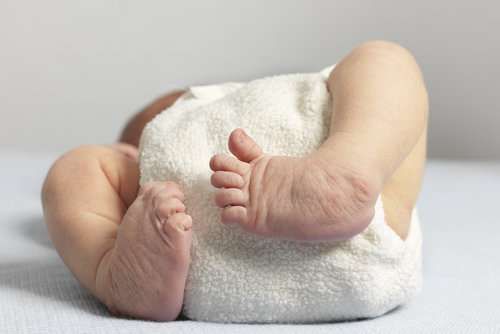
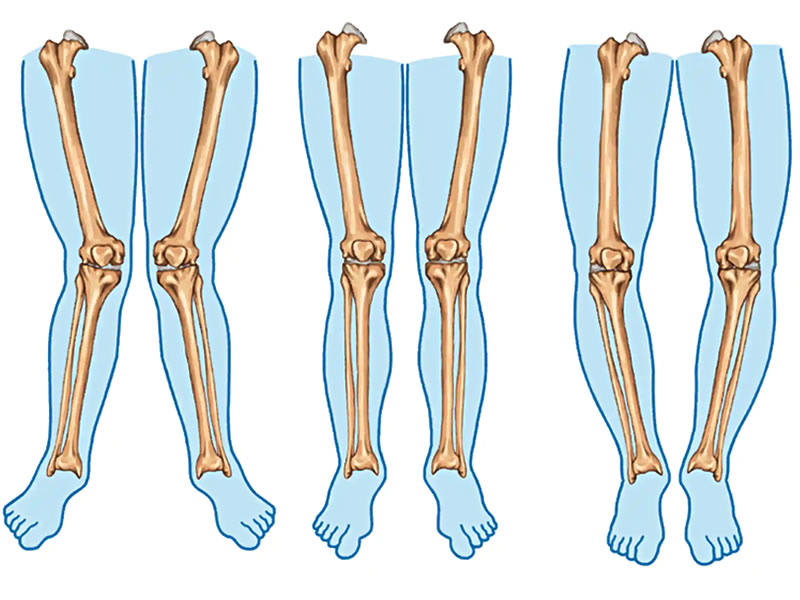
Each child is born with bowlegged legs as they were folded in his mother’s womb. Therefore, bow legs in children under the age of 18 months are accepted as normal. The child’s legs progressively straighten as he begins to walk. Bow legs, however, are regarded as a physical abnormality if they appear after the child…
Read MoreWhat is congenital hip dislocation? Congenital hip dislocation (CHD) occurs when a child is born with an unstable hip. It’s caused by abnormal formation of the hip joint during their early stages of fetal development. Another name for this condition is “developmental dysplasia of the hip.” This instability worsens as your child grows. The ball-and-socket…
Read MoreRadioulnar synostosis is a condition in which the two bones of the forearm are abnormally connected, which limits the rotation of the arm. Radioulnar synostosis is usually congenital. However, it can also occur due to a forearm fracture or trauma. The details on this page concentrate on congenital radioulnar synostosis. What are the symptoms of…
Read MoreA person with polydactyly is one who is born with additional fingers or toes. The words “many” (“poly”) and “digits (“dactylos”) are both Greek. Different kinds of polydactyly exist. The additional digit typically develops near the fifth finger or toe. Polydactyly tends to run in families. It may also result from genetic mutations or environmental…
Read MoreAn unknown brain injury is the most common factor causing the disorder known as cerebral palsy (or CP). It impairs the body’s ability to move and use its muscles. In layman’s terms, it throws off the body’s coordination and makes it difficult for the individual to control their parts and move normally. All motor skills,…
Read More‘Clubfoot’ is a group of foot deformities that shortens the tissues tying muscles to bones or tendons. As a result, the child’s feet may appear to be twisted downward and inward. Infants have difficulty walking because the calf muscles in the affected leg are yet undeveloped. As congenital foot deformities, clubfoot cannot be prevented…
Read MoreOne of the painful medical disorders that keeps your child’s thumb frozen in a bent or flexed position is a trigger finger. The problem may include an inability of the toddler to straighten their bent thumb. Between the ages of one and three, children frequently develop trigger fingers or thumbs. A youngster can develop triggered…
Read MoreBacteria are microscopic, single-celled organisms. Only some bacteria cause disease in people. Other bacteria live inside the intestinal tract, genitourinary tract, or on the skin without causing harm. Some bacteria are even thought to help keep people healthy. Children’s skin infections (including impetigo), ear infections, and throat infections are the most prevalent bacterial infections (strep…
Read MoreThe brachial plexus (BRAY-key-el PLEK-sis) is a network of nerves near the neck that give rise to all the nerves of the arm. These nerves provide movement and feeling to the shoulder, arm, hand, and fingers. Palsy means weakness, and brachial plexus birth palsy causes arm weakness and loss of motion. With frequent physical therapy…
Read MoreAs per the American Academy of Orthopedic Surgeons, the tibia is the most widely recognized long bone in the body to crack. A tibia crack alludes to any break or breaks in the tibia bone. The tibia is one of two bones that make up the lower leg, the other being the fibula. The tibia…
Read More